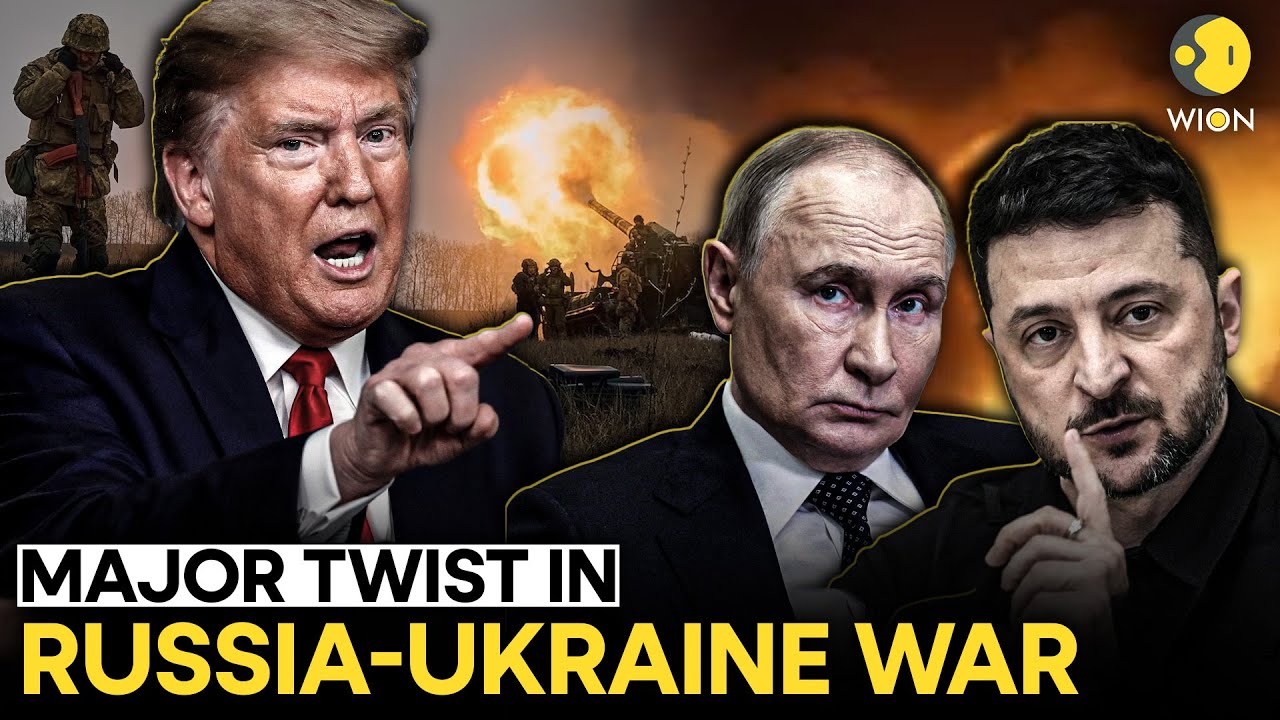
President Donald Trump is once again at the center of geopolitical debate as new commentary from foreign-policy analysts—most notably Mahmood Mamdani—suggests that U.S. global strategy in Ukraine may be approaching a breaking point. Critics argue that shifting alliances, budget strain, and voter fatigue have begun to expose deep cracks in what some describe as Washington’s long-standing “war empire.”
Trump’s recent remarks highlight these fractures even further, claiming that the current administration has “run out of room to maneuver” on Ukraine. Supporters believe Trump’s pressure campaign is forcing the political establishment to confront strategic failures that have been ignored for years.
Mamdani’s Warning: The End of an Era?
Political theorist Mahmood Mamdani, known for his analysis of Western interventionism, has argued that the Ukraine conflict marks a turning point in U.S. military influence. According to Mamdani, the war has exposed structural weaknesses:
- Overreliance on military solutions
- Unsustainable financial support for foreign wars
- Erosion of global trust in U.S. leadership
- Growing domestic opposition to endless conflict
Mamdani describes this moment as a “historical reckoning”, suggesting that traditional post-Cold-War assumptions are collapsing in real time.
Ukraine Funding Fatigue Hits Washington
Congress continues to struggle over additional Ukraine aid, facing intense pressure from voters who want domestic priorities addressed first. Behind closed doors, lawmakers admit that public enthusiasm for prolonging the conflict has sharply declined.
Analysts say this shift is giving Trump significant leverage. His stance—demanding immediate negotiations to stop the war—has forced both parties to re-evaluate their political messaging. With elections approaching, neither side can afford to appear disconnected from voter sentiment.
Trump’s Position: “America Must Stop Feeding Endless Wars”
Trump has repeatedly argued that the United States is being dragged into a conflict with no clear strategy and no exit plan. His message resonates with a growing segment of Americans who feel the country has been stretched too thin—economically, militarily, and diplomatically.
He claims Washington’s foreign-policy establishment is “cornered,” unable to justify rising costs or provide a realistic roadmap to stability in Eastern Europe.
Whether his critics disagree or not, Trump’s narrative is gaining momentum.
Is the War Empire Crumbling?
Geopolitical observers say the unraveling of support for Ukraine signals something larger: a potential decline in America’s interventionist doctrine. For decades, U.S. influence relied on sustained military presence abroad. Now, shifting global power dynamics and domestic political resistance are reshaping priorities.
Key indicators of this shift include:
- Rising skepticism toward long-term foreign wars
- Increased calls for diplomatic solutions
- Growth of populist, anti-interventionist sentiment
- Waning U.S. leverage in key regions
Promethean Action analysts describe the moment as “the most consequential foreign-policy correction in a generation.”
What Comes Next
While predictions vary, one reality is clear: the debate over America’s global role is entering a decisive new phase. Trump’s pressure, Mamdani’s warnings, and the stalemate in Ukraine are converging into a single geopolitical flashpoint.
Whether it leads to reform, retreat, or a new strategy altogether, the era of unchecked intervention appears to be nearing its end.