
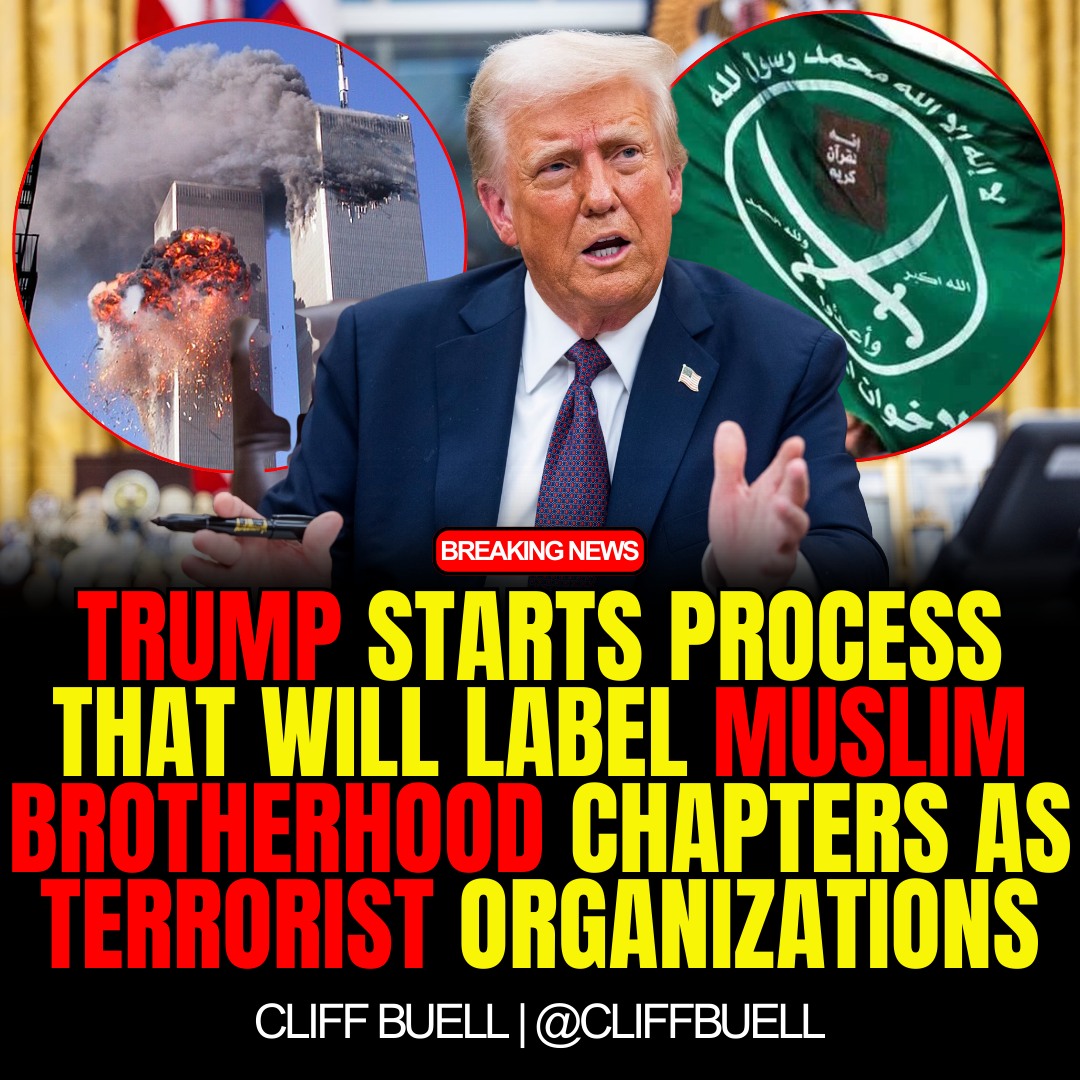
In a sweeping national security move, President Donald Trump has signed a new executive order directing U.S. agencies to begin the formal process of designating certain Muslim Brotherhood chapters as Foreign Terrorist Organizations (FTOs) and Specially Designated Global Terrorists (SDGTs).
The directive marks one of the administration’s most assertive steps in reshaping U.S. counterterrorism policy. The order instructs the State Department, Treasury Department, and intelligence agencies to conduct coordinated reviews of Brotherhood-affiliated networks, assess their activities, and determine which entities meet the statutory requirements for terrorist designation.
What the Executive Order Directs Federal Agencies to Do
Senior administration officials say the order aims to “strengthen national security posture, disrupt extremist financing, and address transnational organizations that pose potential threats to American interests.” The process may involve months of interagency evaluation, including intelligence assessments, diplomatic consultations, and legal review.
The Muslim Brotherhood, founded in Egypt in 1928, functions as a wide-ranging socio-political movement with branches and affiliates across the Middle East, North Africa, Europe, and parts of Asia. Some chapters participate in political life, while others have been accused of supporting or enabling extremist activities. The designation process will differentiate among regional groups rather than apply a blanket classification.
Supporters Say Move Strengthens U.S. Counterterrorism Strategy
Supporters of the move argue it sends a strong message to foreign governments that the U.S. is taking a tougher stance on extremist networks and their financial infrastructures. Critics, however, warn the designation could complicate U.S. diplomatic relations with countries where Brotherhood-aligned parties hold political influence or operate legally.
Legal analysts note that designating organizations as FTOs triggers powerful sanctions: asset freezes, immigration restrictions, criminal penalties for material support, and heightened scrutiny of international financial transfers.
While the executive order initiates the process, final designations will only take effect after the State Department concludes its review and publicly announces determinations in the Federal Register.
More details are expected from the White House and State Department as the implementation phase moves forward.