
Paraguay has announced a bold strategic move to reduce its dependence on the Panama Canal by advancing the construction of the Bioceanic Corridor, a massive $450 million infrastructure project designed to open faster, more reliable trade routes — particularly for exports to China.
The new corridor is expected to be fully operational by 2026, marking one of the most significant logistical transformations in Paraguay’s modern economic history.
A Game-Changing Shift in South American Trade
For decades, Paraguay’s exports — especially agricultural products — have relied heavily on the slow and increasingly congested Panama Canal. With ongoing droughts and water-restriction measures significantly reducing traffic capacity, the canal has become a costly bottleneck for global shipping.
The Bioceanic Corridor offers a solution.

Once completed, this new route will connect Paraguay directly to ports on both the Atlantic and Pacific oceans, enabling the country to streamline trade with Asian markets without the delays and uncertainties of the canal.
Officials say the corridor will cut shipping times, lower freight costs, and open new opportunities for exporters who have struggled with canal disruptions.
Why the Shift Matters for Paraguay–China Relations
China remains one of Paraguay’s most important potential markets, particularly as global demand grows for South American soy, beef, and minerals. The Bioceanic Corridor is expected to:
- Provide faster access to Chinese ports
- Reduce dependence on canal toll fluctuations
- Expand Paraguay’s competitive position in Asian markets
- Strengthen long-term trade partnerships
Economists say the corridor could reshape Paraguay’s export landscape, making it a major logistical hub for the region.
Regional Cooperation and Long-Term Impact
The Bioceanic Corridor is not only a Paraguayan project but a key part of a broader South American integration strategy, connecting Paraguay with Brazil, Argentina, and Chile through modern highways, border infrastructure, and port upgrades.
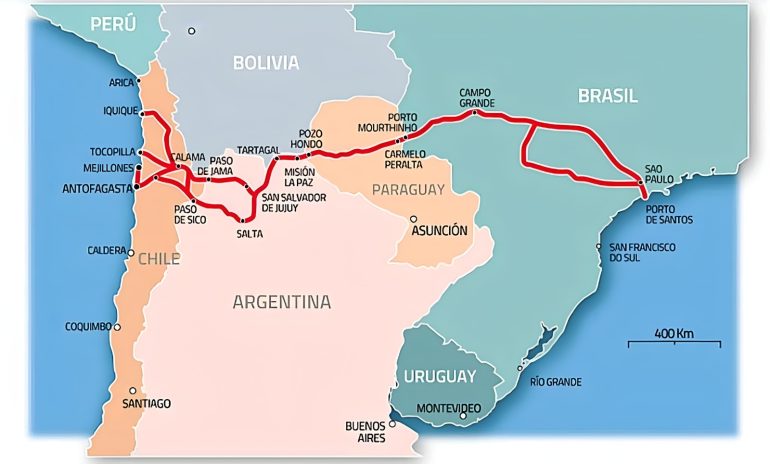
Once active, the corridor is expected to:
- Boost cross-border transportation
- Increase investment in industrial zones
- Accelerate economic growth across the region
- Reduce reliance on maritime chokepoints
Analysts believe the project could become one of the most important trade routes in South America, offering an alternative path for countries facing rising canal-related costs.
Looking Ahead to 2026
With construction advancing and governmental support solidified, Paraguay appears confident in its ability to complete the Bioceanic Corridor on schedule.
If successful, the project will redefine the country’s position in global trade — and potentially reshape shipping flows between South America and Asia for decades to come.
Source: Global Highways

